The Importers and Exporters Association of Ghana (IEAG) has called for a review of shipping industry representation on the boards of key maritime institutions, arguing that unresolved port charges and congestion are increasing the cost of doing business and weakening Ghana’s trade competitiveness.
The Association has petitioned President John Mahama to remove representatives of the Ship Owners and Agents Association of Ghana (SOAAG) from the boards of the Ghana Maritime Authority (GMA) and the Ghana Ports and Harbours Authority (GPHA).
The petition follows concerns over what the IEAG describes as persistent resistance to government directives on charges imposed on importers, particularly the Container Administrative Charge.
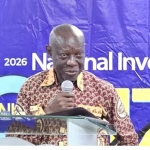
Speaking at a press conference in Accra, Mr Samson Asaki Awingboit, Executive Secretary of the IEAG, said importers were continuing to bear a Container Administrative Charge of about US$165 per container despite a regulatory directive and a High Court ruling setting a GH¢720 per TEU ceiling for import and export containers.
The Association said such charges added to the cost of importing goods and could ultimately be reflected in higher prices for businesses and consumers.

Mr Awingboit said the continued dispute over the charge raised broader concerns about the effectiveness of regulation in the maritime sector and the ability of government to ensure predictable and competitive trading conditions.
He said the issue was particularly important because Ghana’s ports remain a major gateway for international trade and any increase in port-related costs could affect the competitiveness of Ghanaian businesses.
“IEAG finds it unacceptable that importers continue to bear a charge of approximately US$165 per container when a regulatory directive and a High Court ruling have established a GH¢720 per TEU ceiling for both import and export containers,” he said.
The Association cited the 2016 dispute over Terminal Handling Charges as an example of previous disagreements between government and shipping industry stakeholders.
According to the IEAG, shipping lines continued imposing the charges despite a directive from the Ministry of Transport until interventions by the then GPHA Director-General, Mr Richard Anamoo, and President Mahama resulted in compliance.
Mr Awingboit said the recurrence of disputes over shipping charges raised questions about regulatory enforcement and the balance of interests represented on the boards of maritime institutions.
He said the Association was therefore seeking a review of SOAAG’s representation to ensure that governance structures within the maritime sector adequately reflected the interests of all stakeholders, particularly businesses that depend on efficient and affordable port services.
The petition comes as the IEAG also calls for urgent measures to address congestion at Ghana’s ports.
The Association warned that delays in cargo clearance, coupled with rising port and logistics costs, could increase the cost of imported inputs and finished goods and undermine the competitiveness of businesses engaged in international trade.
For manufacturers and traders, the Association said, prolonged cargo delays could translate into higher storage, demurrage, transportation and financing costs.
It said reducing such costs would be critical to improving Ghana’s position as a trading hub and supporting businesses seeking to take advantage of regional markets, including the African Continental Free Trade Area.
The IEAG said its request for a review of SOAAG’s board representation was therefore rooted in concerns about accountability, regulatory compliance and the need to create a more predictable business environment for importers and exporters.
It urged government to strengthen oversight of the maritime sector and ensure that port charges and operational policies support, rather than undermine, Ghana’s trade and economic competitiveness.