Senior trade officials from the Economic Community of West African States (ECOWAS) have convened in Accra to advance discussions on regional trade integration, focusing on the removal of structural bottlenecks and improved implementation of continental and sub-regional trade frameworks, including the African Continental Free Trade Area (AfCFTA).
The meeting, which precedes the Fifth Meeting of ECOWAS Ministers of Trade (ECOMOTI-5), is expected to generate policy recommendations on trade facilitation, digital trade, regional market integration, and the harmonisation of customs and regulatory systems.
Officials are also reviewing progress on the post-WTO MC14 roadmap as member states seek to position the sub-region within an increasingly fragmented global trading environment marked by “slowing growth,” “supply chain disruptions,” and rising protectionist measures.
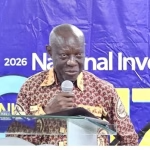
Opening the three-day session, Ghana’s Deputy Minister for Trade, Agribusiness and Industry, Sampson Ahi, emphasized the economic implications of fragmented regional markets, describing deeper integration as an “economic necessity” for expanding intra-African trade, improving competitiveness, and attracting investment into productive sectors. He noted that strengthening regional systems remains critical for job creation and long-term development outcomes across West Africa.

He further stressed the urgency of accelerating the implementation of regional and continental trade commitments, particularly AfCFTA, while addressing long-standing non-tariff barriers that continue to constrain cross-border trade flows. He also called for renewed attention to safeguarding the ECOWAS Customs Union and ensuring the effectiveness of the Common External Tariff framework, describing compliance gaps as a constraint on predictability and market efficiency.

Representing the ECOWAS Commission, Director of Trade, Mr. Kolawole Sofola, highlighted the region’s underlying economic potential, anchored in its “abundant human and natural resources,” but cautioned that policy execution gaps continue to undermine gains made in regional integration efforts.
He pointed to consultations held during ECOWAS’ 50th anniversary engagements, which revealed growing concerns among private sector actors and citizens regarding the slow pace of implementation of agreed trade protocols. In particular, he referenced challenges linked to non-tariff barriers and the movement of goods and people, which stakeholders described as limiting “seamless regional mobility” and reducing trade efficiency within the bloc.
Sofola further noted that despite global economic headwinds, including trade tensions and uneven recovery patterns, Africa continues to demonstrate resilience and remains positioned for sustained growth, provided that member states strengthen coordination and deepen policy alignment.
The Accra meeting is expected to consolidate technical inputs ahead of ministerial discussions at ECOMOTI-5, with recommendations covering AfCFTA operationalisation, regional trade partnerships, digital trade infrastructure, and improvements to trade facilitation systems. Officials are also expected to propose measures to enhance regulatory coherence and address persistent logistical and administrative bottlenecks across borders.