
By using this site, you agree to the Privacy Policy and Terms of Use.
Accept
The High Street Journal
  • HOME
  • BUSINESS & ECONOMY
  • NEWS & UPDATES
  • WORK & CAREERS
    • THSJ Resources
  • LEGAL INSIGHTS
  • INNOVATION
  • OPINIONS
  • #STOPGALAMSEY
The High Street JournalThe High Street Journal
Search
  • HOME
  • BUSINESS & ECONOMY
  • NEWS & UPDATES
  • WORK & CAREERS
    • THSJ Resources
  • LEGAL INSIGHTS
  • INNOVATION
  • OPINIONS
  • #STOPGALAMSEY
Follow US
© 2024 | The High Street Journal. All Rights Reserved.
News

Less Than 1% of Poorest Households Use Clean Cooking Fuels – Report

Less than 1% of Ghana’s poorest households use clean cooking fuels, highlighting disparities despite national progress. Urban and wealthy households have significantly higher adoption rates.

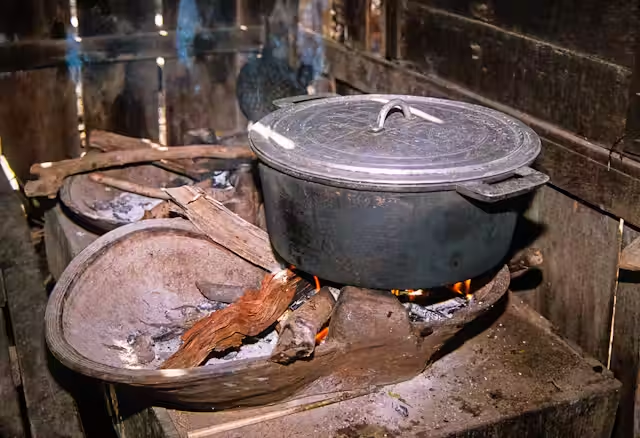
Polluting cooking fuels are still preferred in parts of Africa. Alan Morgan/Flickr
Stanley Senya
Jan 29, 2025

Data from the Ghana Demographic and Health Survey (GDHS) has indicated that less than 1% of the poorest households use clean cooking fuels.

This was contained in a news statement released by the Ghana Statistical Service (GSS) in commemoration of the International Day of Clean Energy.

It said while the overall percentage of the population using clean fuels for cooking has tripled over the past two decades from 7.3% in 2003 to 22.5% in 2022, progress remains uneven across different wealth quintiles.

Clean fuels and technologies for cooking include electricity, liquefied petroleum gas (LPG), natural gas, biogas, solar, alcohol, or ethanol. 

The statement said households in the highest wealth quintile saw a significant increase in clean fuel usage, rising from 34.7% to 78.0% over the period.

READ ALSO

E-Waste Management Struggles to Keep Pace With Ghana’s Digital Expansion
UniMAC’s Graduate Surge Puts Ghana’s Creative Jobs Challenge in Focus
GEXPO 2026: Do You Want to Try Chocolate with Chilli, How About with Kelewele?

In contrast, households in the fourth wealth quintile increased their usage from 1.8% to 27.9%.

Alarmingly, the percentage of households in the poorest wealth quintile using clean fuels marginally changed from 0.0% to just 0.5% over the 19 years.

Similarly, households in the second wealth quintile increased from 0.0% to 1.3%, while those in the middle quintile saw an increase from 0.0% to 4.6%.

Disparities are also evident when comparing urban and rural areas. The usage of clean fuels in urban households doubled from 15.8% to 36.4% between 2003 and 2022, whereas rural areas experienced a modest increase of just 5.9 percentage points, rising from 1.2% to 7.1%.

“With the regional variations the Greater Accra Region recorded the highest increase at 24.8 percentage points, while the Savannah Region saw a minimal rise of only 0.9 percentage points”, the statement said. 

In total, six regions experienced increases of less than 5.0 percentage points, contributing to about one-third of the national increase of 15.2 percentage points.

These regions include the North East (1.5 percentage points), Western North (2.4 percentage points), Oti (3.2 percentage points), Upper West (3.2 percentage points), and Bono East (4.5 percentage points).

Despite the disparities, the Ghanaian government has introduced initiatives such as subsidized LPG programs and rural electrification projects to promote clean cooking solutions. However, experts argue that high costs, inadequate distribution networks, and lack of awareness hinder widespread adoption, especially in low-income and rural communities.

Share this:

  • Share on X (Opens in new window) X
  • Share on Facebook (Opens in new window) Facebook
Advertisement

Like this:

Like Loading…

Related

Subscribe to Our Newsletter
Subscribe to our newsletter to get our newest articles instantly!
[mc4wp_form]
Share This Article
Facebook Whatsapp Whatsapp LinkedIn Email
Previous Article Remittances to Ghana in 2024 Exceed Foreign Direct Investment by Over $4 Billion
Next Article Ghana Secures $2.8 Billion Debt Relief Deal with Official Creditors – A Boost for the Economy Ghana Secures $2.8 Billion Debt Relief Deal with Official Creditors – A Boost for the Economy
Advertisement

LATEST NEWS

Newmont Commits US$15m to Ghana’s Tree for Life Initiative
Business & Economy
VEEP Calls for Transport Sector Reforms, Promises Support for Public and Private Operators
Ghanaian Businesses Must Adopt AI With Safeguards to Drive Growth, Vice-President Says
Business & Economy
CERPA Boss Calls for Policy Consistency to Deliver the 2027 Budget’s Production Agenda
Business & Economy
Volta Lake Weeds Could Become New Source of Organic Fertiliser for Farmers
Business & Economy
Ghana Could Be Making Significant Debt-Service Savings in the GH¢28.58bn Bond Buyback
Business & Economy

You May Also Like

SIC-FSL Cuts All Staff and MD Pay by 20% to Save the Struggling Firm

SIC-FSL Cuts All Staff and MD Pay by 20% to Save the Struggling Firm

President Mahama Orders Immediate Cancellation of SML Contract After OSP Probe

Why Ofori-Atta Is Back on the Wanted List: Interpol Red Notice Reinstated Amid OSP Probe

2025 Budget: CERPA's Assessment of the Strengths & Weaknesses of Key Policy Initiatives of Gov’t

Veep Woos Ghana Armed Forces to Champion Gov’t’s 24-Hour Economy Amid ¢3.7B Defense Ministry Debt

Founder of KAMA Group Michael Agyekum Addo dies aged 74

Ghana’s Flood Fight Needs More Than Drains

GIPC Identifies High-Potential Investment Clusters in Central and Western Regions

Ghana Scraps Minimum Capital Requirements For Most Foreign Investors

'IFRS 17' Rules Put Ghana’s Weak Insurance Sector Under Pressure - But This Might Be Exactly What It Needs

Deloitte Urges Insurance Firms to Build Comprehensive Fraud Strategies Amid Rising Cyber Threats

GoldBod to Supply US$1.4bn Forex to Banks, BoG in September 

The High Street Journal

About Us

Delivering focused and insightful business perspectives; impacting lives.

Email: [email protected]

Useful Links

  • About
  • AI Strategy & Policy
  • Advertise
  • User Policy
  • Be a Guest Author
  • Contact Us
  • Sitemap

Stay Connected

© 2026 | The High Street Journal. All Rights Reserved.

%d