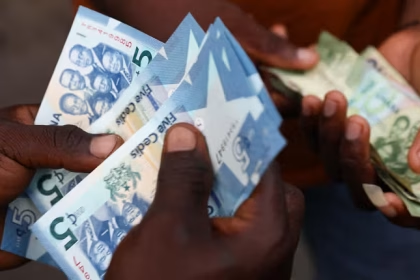
Between August and 7 October, the Bank of Ghana (BoG) sold GH¢228.08 billion worth of 14-day bills in 20 auctions.
Checks by The High Street Journal reveal that the Central Bank mopped GH¢106.75bn in August, GH¢101.79bn in September and GH¢19.53bn so far in October. The interest on the bills averaged 10.5%.
For banks and institutional investors, the 14-Day OMO bill is a gentle deal. Park the cash for two weeks, collect interest, and skip the collateral checks and the chasing of borrowers.
Now to the irony. Bank of Ghana’s data show the average lending rate stood at 15.9% at the end of August, and some banks charge as much as 30%. A baker in Kumasi who needs an oven, or a trader in Tema who needs a container, pays more than a bank earns for risk-free parking.

The Ghana Reference Rate, the loan-pricing benchmark, was 10.6%, close to the bill rate. The rest of the 15.9% is bank margin.

The BoG has reasons for its open market operations. Its job is price stability, and surplus cash can fuel inflation and pressure the cedi. In July, it held its policy rate at 14%, citing inflation risks and external pressure.
But can the excess liquidity do something else than just take a nap at the Central Bank? Given the financing needs of the real productive sector, it is imperative that the authorities become innovative and channel these funds into critical sectors of the economy.

At the moment, four options are clear;
Longer-dated project bonds
Five- to ten-year infrastructure bonds would still absorb liquidity, but lock it into roads, power and factories instead of fortnightly rollovers. To win the same money, they would need to pay competitively and fund projects that can repay.
Credit guarantees
If government shares the risk on loans to manufacturers and agro-processors, banks may find lending less scary than parking.
Rewards for lending
Banks that lend to productive sectors could get better terms on central bank paper, while pure parking earns less.
A development window
A state-backed fund could channel part of the surplus to bankable, low-import projects, chosen through transparent criteria.

The Possible Trade-Offs
There are trade-offs. Cedis lent out circulate, so the inflation risk the BoG guards against can return. Directed credit has a mixed record in many countries, and weak projects can leave banks with bad loans.
Therefore, any repurposing must protect the central bank’s independence and its inflation target.
Still, the question is hard to ignore. If 10.5% is the price of stability, is a 14-day parking deal the best way to pay it? Or can part of that GH¢228bn be sent to work, with the same discipline, in the real economy?