
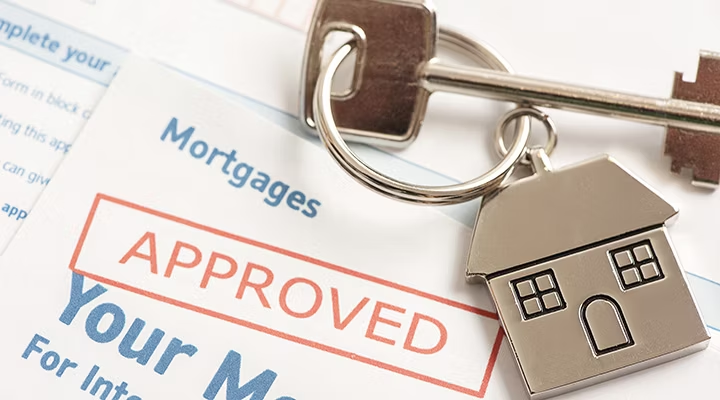
It is emerging that banks in Ghana are increasingly playing a major role in the country’s slow and underdeveloped mortgage market.
Industry players are pointing to poor customer engagement and unrealistic processes by some banks as key barriers to the growth of the mortgage market.
While mortgages are widely promoted as a pathway to home ownership, many potential buyers are walking away frustrated, often after spending weeks or months pursuing loans that never materialise.

Where the Process Breaks Down
According to industry players, the problem often begins the moment a customer walks into a bank.

Instead of first assessing what the client can realistically afford, many banks hand out checklists or direct customers to property options.
This is done without a clear understanding of the customer’s financial capacity. In some cases, prospective buyers are told they need a minimum deposit of about 20%.
But without proper guidance, many interpret this as the standard requirement and proceed to shop for homes far beyond what they can actually finance.
The Costly Mismatch
This, the industry players say, results in a familiar and frustrating cycle.
A customer identifies a property, sometimes worth as much as GHS 1 million, based on the assumption that they can raise the required deposit. They begin the application process, submit documents, pay fees, and wait.
Then weeks later, reality hits.
The bank may approve only half the requested amount, leaving the buyer scrambling to find the remaining funds, often far beyond their means. For many, this is where the journey ends.
These disappointed and disillusioned customers then abandon the process altogether. They then proceed to share their negative experiences with others, further eroding trust in the mortgage system.

A Trust Deficit in the Market
Industry observers say this mismatch between expectations and reality is one of the biggest reasons mortgages have struggled to gain traction in Ghana.
For the real estate practitioners, the problem is not that people don’t want mortgages. It’s that the process makes them lose confidence.
The perception that banks are not transparent or upfront about affordability is creating a growing trust deficit.
A Simpler, Smarter Approach
The solution, according to industry voices, is straightforward. They are calling on the banks to reverse the process.
Banks are being urged to begin with a full financial assessment of the customer. This assessment will clearly state how much they qualify for and what deposit is required before sending them out to search for a home.
With this approach, buyers can make informed decisions, avoid unrealistic expectations, and focus only on properties within their approved budget.

Missed Opportunities
There is also criticism of how some bank staff handle potential clients. Frontline mortgage officers, it is argued, are often too quick to hand out brochures instead of engaging deeply with customers’ needs, financial realities, and long-term goals.
This transactional approach, industry players say, is costing banks potential business and slowing the growth of the mortgage market.
The Rethinking
For a country with a significant housing deficit, a functional mortgage system is critical.
But until banks shift from a product-driven approach to a customer-focused one, many Ghanaians may continue to see mortgages not as an opportunity, but as a frustrating dead end.
For now, if banks want more people to embrace mortgages, they must first make the process more transparent, realistic, and human-centred.


