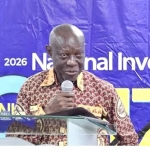
The Chamber of Petroleum Consumers (COPEC) is urging the government to initiate a comprehensive audit of the Unified Petroleum Price Fund (UPPF) and review the operational structure of the National Petroleum Authority (NPA), citing inefficiencies and hidden costs that are burdening fuel consumers.
COPEC’s Executive Secretary, Mr. Duncan Amoah, highlighted what he described as a lack of transparency in the management of key regulatory mechanisms such as the Laycan period, a contractual timeframe in the petroleum importation process.
According to Mr. Amoah, this opacity has led to the accumulation of over $40 million in demurrage charges during the first half of the year alone. These costs, incurred by Bulk Oil Distribution Companies (BDCs) and importers due to delays in discharging petroleum cargoes, are ultimately passed on to consumers at the pump.
“This is the time to thoroughly assess the role and operations of the NPA,” the Laycan schedule is not accessible even to key market players like GOIL and BDCs. The lack of clarity raises serious concerns about who controls these timelines and how that affects pricing,” Mr. Amoah said.
He stressed that without clear oversight and transparency, speculative practices and logistical inefficiencies continue to inflate fuel prices for Ghanaians.

“Over $40 million in demurrage was borne by importers in just six months. These are costs that have been quietly passed down to the ordinary Ghanaian. We shouldn’t wait until years later to investigate what we already know is happening,” he added.
Mr. Amoah further accused certain actors of profiting from the mismanagement of Laycan allocations, warning that the fuel importation regime risks becoming unsustainable without regulatory reform.
Calls for Audit of UPPF
COPEC is also calling for an independent audit of the Unified Petroleum Price Fund (UPPF), which is designed to equalize fuel transportation costs across the country. The chamber argues that the current structure is fraught with unapproved levies and questionable disbursements.
“What consumers pay into the UPPF is now more than 90 pesewas per litre, yet transporters reportedly receive only about 45 pesewas. Where is the rest of the money going?” Mr. Amoah queried.
He alleged that some of the fees embedded in the UPPF are not sanctioned by Parliament, describing the situation as a leakage of public funds into private hands.
“These charges have not gone through any legislative scrutiny, and yet Ghanaians are made to pay them daily. The UPPF, in its current form, is enriching private individuals rather than supporting the transportation and distribution chain as intended,” he said.
Urgent Need for Regulatory Reform
COPEC insists that beyond audits, the government must take bold steps to restructure the NPA to restore credibility and ensure effective regulation of the downstream petroleum sector. The chamber believes that a lack of transparency and regulatory loopholes are fuelling inefficiencies and price hikes.
Mr. Amoah emphasized that the petroleum sector cannot function sustainably if key stakeholders are kept in the dark about operational processes that directly impact fuel pricing.
“The entire system needs to be opened up. From Laycan management to UPPF disbursement, the government must act decisively to protect the Ghanaian consumer from bearing the cost of institutional failure,” he said.