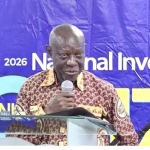
Ghana’s Special Envoy for Reparations is calling for closer coordination with the Ministry of Tourism, Culture and Creative Arts and its agencies to advance the country’s reparations agenda through heritage tourism, including a plan to mobilise $100 million for the restoration of historic forts and castles.
The proposal seeks to align reparative justice advocacy with tourism development, positioning Ghana’s UNESCO-listed slave trade-era sites as both memorial landmarks and economic assets capable of attracting diaspora engagement and international funding.

Deputy Tourism Minister Yussif Issaka Jajah welcomed the engagement and reaffirmed the Ministry’s commitment to rehabilitating the country’s network of coastal forts and castles. His remarks follow concerns raised by UNESCO over deteriorating structural conditions at some heritage sites.
Officials acknowledged that restoration efforts have faced funding constraints and stalled rehabilitation programmes. However, the Ministry signalled readiness to collaborate on resource mobilisation initiatives aimed at preserving the sites while strengthening Ghana’s cultural tourism offering.
The forts and castles, many of which date back to the transatlantic slave trade era, remain central to Ghana’s heritage tourism strategy and its engagement with the African diaspora. Restoration and preservation are viewed not only as conservation imperatives but also as potential drivers of visitor growth, foreign exchange earnings and private-sector participation in the creative economy.

The Ministry reiterated its commitment to safeguarding the sites despite fiscal pressures, pledging to work with stakeholders to mobilise funding, protect heritage assets and enhance tourism-led economic activity.

If successful, the proposed $100 million fundraising initiative would represent one of the most significant coordinated efforts to link cultural preservation, reparative advocacy and tourism-driven development financing in Ghana.