Ghana’s neighbour and a powerhouse in the Sub-Regional economy, Ivory Coast, is heading to the polls tomorrow to elect a new leader. Although the election is taking place in Ivory Coast, the stakes extend far beyond Abidjan. From Accra to Lomé and across West Africa, policymakers, traders, and farmers are watching anxiously.
With high tensions and uncertainty, the outcome of this election could either strengthen or shake the region’s fragile economic stability.
Ivory Coast is not just another neighbor. It is one of Ghana’s leading trading partners in West Africa. For instance, in 2023, the value of the trade between the two countries was estimated to be around a little over half a billion dollars. The neighbour is also the world’s biggest cocoa producer, working alongside Ghana to supply nearly 60% of the world’s cocoa beans.
Given Ivory Coast’s role in the region, a peaceful election cannot be overemphasized. Not only will the former French colony’s economy suffer should there be any unrest, but Ghana, the ECOWAS region, and the rest of the world will suffer a great deal.
Political or election-related unrest, as history has shown, could easily spill across borders, driving up prices, weakening currencies, and hurting livelihoods. There are a number of good economic reasons why peace in Ivory Coast’s tomorrow polls is imperative.


Cocoa Sector Stability
Take cocoa, for instance. If violence disrupts production or transportation in Ivory Coast, cocoa prices on the world market will swing wildly. That sounds like good news for farmers, but it won’t be all rosy because Ghana’s cocoa supply chain is interlinked with Ivorian routes.
The cost of transport, insurance, and exports would surge, and buyers could suspend contracts. For thousands of Ghanaian farmers and exporters, that would mean delayed payments and reduced income.
Regional Trade on Brink
Trade would also take a direct hit. Every day, hundreds of trucks loaded with food, fuel, and manufactured goods move between Ghana and Ivory Coast through Elubo and other border posts. Political disturbances would choke this trade artery, sending prices of essential goods like rice, cement, and cooking oil upward.
This means Ghana’s inflation, which has cooled significantly, can take a hit and possibly through prices into disarray.
Informal traders, the market women, and cross-border drivers, who form the lifeblood of Ghana’s small business economy, would be the first to feel the pain.

Regional FDI Could Suffer
Ivory Coast has, over the past years, emerged as a magnet for investors in Francophone West Africa, increasing the investment into the sub-region. A stable Abidjan boosts confidence in the entire region, including Ghana. But if violence breaks out, it could trigger capital flight, cause investors to delay projects, and lead to higher risk premiums across the sub-region.
Also, instability in other parts of the sub-region, such as Mali, Burkina, and Niger has negatively affected the attraction of investors into West Africa. Should Ivory Coast be plunged into a similar instability, the attractiveness of the sub-region for foreign direct investment will further worse.
In addition, an unstable Ivory Coast will increase the risk profile of countries in the region, making borrowing more expensive, from governments to small businesses.
Direct Fiscal Strain
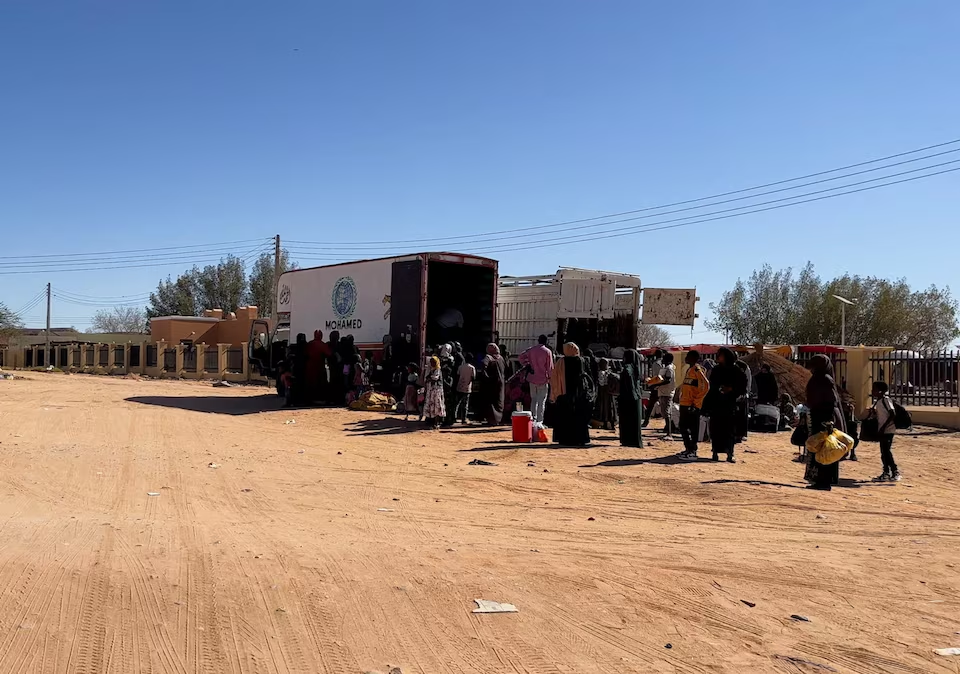
And beyond the numbers, there’s the human cost. The 2010–2011 Ivorian crisis displaced hundreds of thousands of people, with many seeking refuge in Ghana. By international convention, these refugees were under the care of the government, hence straining the country’s budget.
A repeat scenario would not only be tragic but would also stretch Ghana’s public finances, as the government would need to accommodate refugees, strengthen border security, and provide emergency relief, all at a time when every cedi counts.
The Bottomline
Undoubtedly, whatever happens in Ivory Coast tomorrow could determine how steady Ghana’s economy and that of the sub-region and the world will remain in the months ahead.
Peaceful elections will safeguard the region’s cocoa value and supply chain, keep markets open, anchor inflation, and preserve investor confidence. Violence, on the other hand, would carry a price too steep for Ghana and the region to bear.
As Ivorians cast their ballots, West Africa holds its breath. For the sake of regional trade, investment, and livelihoods, the Ivory Coast must choose peace, not just for itself, but for the shared prosperity of all.