President John Dramani Mahama has called on African leaders to deepen intra-continental trade and reduce reliance on global markets by leveraging the African Continental Free Trade Agreement (AfCFTA) as a strategic instrument for economic transformation.
Speaking at the 2025 Annual Meeting of the African Development Bank (AfDB) in Abidjan, Mahama emphasized the importance of unity, infrastructure, and local value addition in shielding Africa from the disruptive effects of external trade policies.

“Unfortunately, the system is being appended and countries have decided to impose tariffs based on their own interest,” Mahama said, referring to rising protectionism in global trade.
“It sends a signal to Africa that there is no free dinner anywhere.” He added.
He argued that the AfCFTA provides the continent a historic opportunity to reshape its trade architecture and harness its own economic potential.


“We must look inward and see how we can trade more among ourselves. Happily, we have the AfCFTA, which majority of African nations have ratified. What it means is that we have the opportunity to trade among ourselves,” he stressed.
Mahama urged African countries to mobilize domestic revenues and invest in strategic infrastructure to connect markets across the continent.
“We must mobilize revenue locally. We must add value to our products, and we must get a better share for the natural resource endowment that God has given us.”
He commended the AfDB for its ongoing investments in trade-related infrastructure, which he said were vital to ensuring the success of AfCFTA.
“It is not enough to have a protocol on trade. If you don’t have the railways, if you don’t have the highways, if you don’t have the aviation connection to be able to exchange goods, it comes to a knot. We must take advantage of that.”He stated.
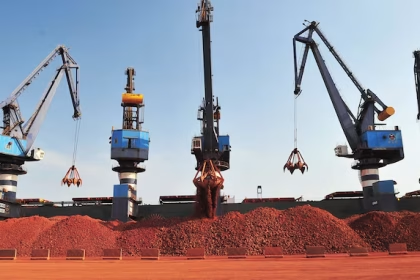
Using Ghana as a case in point, the former president highlighted the strategic expansion of the Tema Port under his administration, which has transformed it into a regional shipping hub.
“In Ghana, we have expanded our ports and it has become a hub for receiving some of the biggest ships. This has opened the Tema Port to receive bigger vessels from all parts of the continent for onward movement to landlocked countries.” He noted.
In closing, Mahama reinforced the need for Africa to own its development narrative. “We must integrate. We must harmonise. And we must build an Africa that is not merely reacting to global forces, but actively shaping its own economic destiny.”
Mahama’s comments come at a time when global trade uncertainties, protectionist policies, and supply chain disruptions are compelling African nations to rethink their economic dependencies. With AfCFTA now ratified by most countries on the continent, the challenge lies in moving from policy to implementation something Mahama believes must be backed by robust infrastructure and deliberate economic planning.