
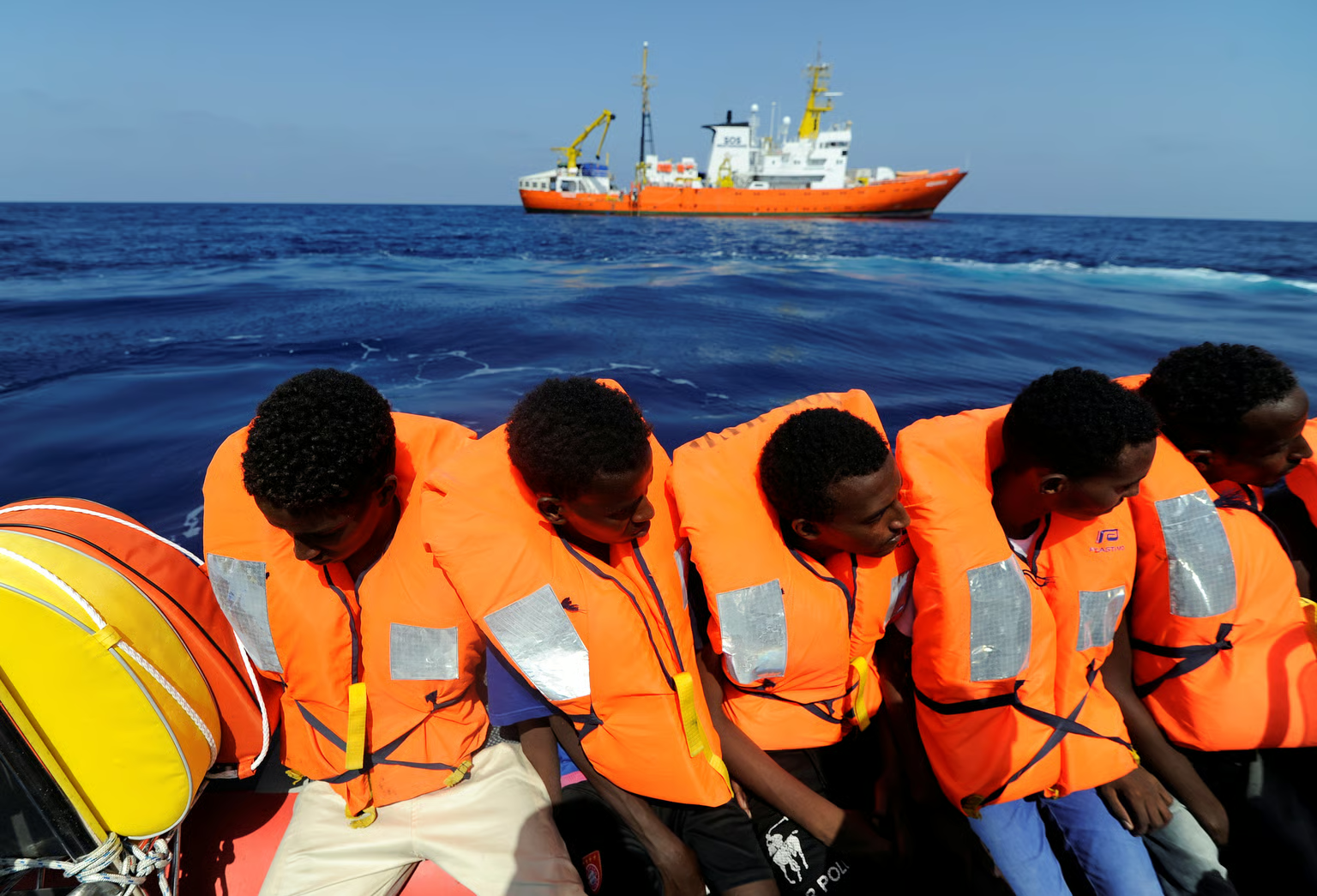
Apart from Ghana’s high unemployment situation threatening security, it has also “blossomed” into a serious migration crisis.
According to IMANI Africa, the growth and jobs numbers touted by politicians look neat on paper. Economists also point to growth rates, recovery signs, and the promise of a brighter tomorrow.
However, for millions of Ghanaians, the story of work is not one of progress since no improvement is seen. IMANI says the plight of the Ghanaian youth now is one of survival.
An article authored by the policy think tank referenced the recent World Bank report, which revealed that despite all the progress touted, only 13 percent of Ghana’s workers are in high-quality jobs.

For the rest, the picture is bleak. Many young people are dropping out of the labour force, women are locked in insecure work, and countless others are squeezed into the shadows of a gig economy that offers little dignity.

IMANI, therefore, observes that it is no surprise, then, that migration has become the ultimate escape plan. Young men and women are not only leaving their hometowns for Accra; they are braving deserts and risking their lives in overcrowded boats across the Mediterranean.
The think tank says their decision is not a rejection of home or patriotism, it is a rejection of hopelessness.

For those who stay, they struggle to make ends meet. Taxi drivers with university degrees. Teachers moonlighting as mobile money agents. Nurses braiding hair after long shifts because their salaries cannot keep food on the table.
Ghana’s so-called growth, IMANI says, feels like a mirage or statistics stretched into illusions while citizens stretch coins into miracles.
What should be the country’s most dynamic generation is instead being drained of hope. The job crisis has become a migration crisis.

Each young Ghanaian who packs a bag or boards a dangerous journey is not just chasing opportunity; they are fleeing a system that has failed to create one.
For this, IMANI says, until the political promises of jobs at home are made tangible, Ghana risks losing its most precious resource, with its energy and ambition.


