

Ghana’s cocoa sector, a cornerstone of the country’s foreign exchange (FX) earnings, is teetering on the edge of long-term decline unless immediate and far-reaching reforms are implemented, the Netherlands’ Ambassador to Ghana has warned.
Speaking at a high-level public-private dialogue on Ghana’s readiness for the European Union’s Corporate Sustainability Due Diligence Directive (CSDDD), Ambassador Jeroen Verheul delivered a stark message: without significant productivity boosts and alignment with global sustainability benchmarks, Ghana risks losing its competitive edge in the global cocoa market.

“If production is going down as it is going down right now, then that means there is less export of cocoa and less foreign exchange earned by farmers and less foreign exchange earned by the economy. So it’s a threat to the economy there is an imperative for the Ghana economy to maintain the cocoa sector, to invest in it, to make it more productive and competitive,” Mr. Verheul said.
Ghana, the world’s second-largest cocoa producer after Côte d’Ivoire, is now facing stiff competition from emerging players like Brazil and Ecuador, where advanced mechanization, large-scale farming, and vertically integrated value chains are driving production growth.
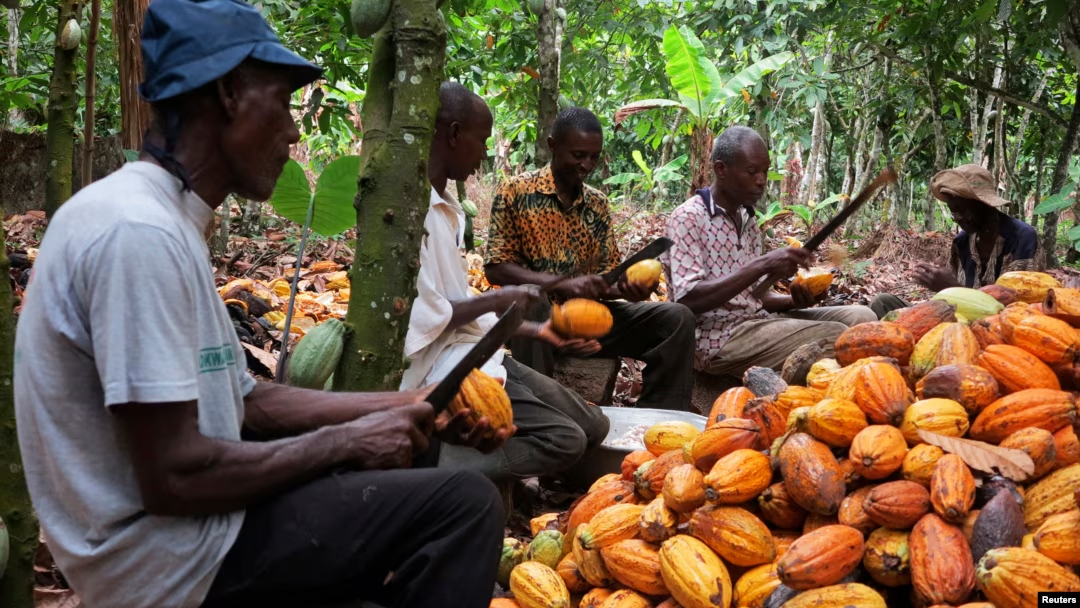
In contrast, Ghana’s sector has been hampered by structural inefficiencies, aging farms, low yields, limited mechanization, and slow-paced reforms. These challenges are compounded by the looming enforcement of the EU’s CSDDD, which will require cocoa exporters to meet strict environmental, human rights, and traceability standards or risk exclusion from one of their most lucrative markets.

The CSDDD directive is set to change agricultural export dynamics across Africa, placing new regulatory burdens on countries like Ghana. Cocoa, a flagship export to the EU, will be under increased scrutiny, particularly for deforestation-linked practices and labour conditions.
“Ghana’s future competitiveness will hinge on scalable investments in productivity, coupled with robust compliance mechanisms to meet evolving global standards,” Verheul noted.
To close the compliance gap, the International Trade Centre (ITC) has stepped in with targeted interventions. According to Larry Attipoe, National Coordinator for ITC’s value chain initiatives in Ghana, the programme is focused on equipping producers with the technical know-how and market intelligence needed to navigate the new sustainability landscape.

“We bring information. What does it take you to produce to meet international demands and meet all the specifications,” Attipoe explained, stressing the importance of this support in shoring up the sector’s resilience and long-term viability.
Beyond agriculture, the declining fortunes of the cocoa sector pose a significant macroeconomic risk. The Bank of Ghana depends heavily on foreign exchange inflows from cocoa exports to shore up its reserves and support the cedi. With the country still navigating an IMF-supported recovery programme, any prolonged dip in cocoa revenue could trigger ripple effects across the fiscal and monetary spectrum.


