
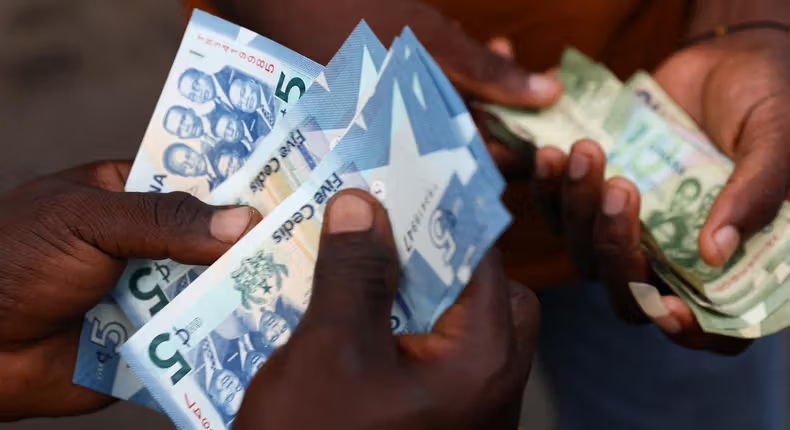
After months of gradual easing, Ghana’s average lending rate, which had offered a glimmer of hope for businesses and households, has unexpectedly stalled in its downward journey.
The lending rate is the average cost businesses and individuals pay for borrowing from financial institutions.
According to the latest Bank of Ghana Summary of Economic and Financial data, the average lending rate inched up slightly from 26.90% in May to 27.00% in June 2025, halting a consistent four-month decline that had stirred optimism across the private sector.
Between February and May 2025, the lending rate fell from 31.00% to 26.90%, a rare stretch of relief in a high-interest economy.

Entrepreneurs, manufacturers, and middle-income borrowers who had begun to breathe easier amid easing rates had high hopes that the reduction would continue.

However, the reversal, although marginal, comes at a huge cost to businesses.
Some businesses had already begun projecting a cut in the cost of expansion loans by the end of the year. However, this sudden uptick will force businesses, manufacturers, and entrepreneurs who had planned expansion funded by loans to delay such investments.
Many attributed the drop to improved inflation outlooks and a relatively strong cedi performance. But the June reversal now raises questions about the sustainability of that easing trajectory.

Financial analysts say the hiccup may be a signal of underlying stress in credit risk assessments or expectations of tightening liquidity in the banking sector, especially as the Monetary Policy Rate has remained unchanged at 28.00% for three consecutive months.
The impact is immediate and wide-reaching. For households seeking credit for home improvements, appliances, or school fees, the rate freeze means no additional breathing space. For small businesses looking to restock or expand, access to affordable credit remains elusive.
The Ghanaian private sector has long contended with some of the highest lending rates on the continent, often discouraging long-term planning and investment. The brief period of declining rates had been viewed as a window of opportunity for many struggling sectors.

Despite the hiccup, the coming days are crucial as the Monetary Policy Committee is currently having its 125th meeting. The decision that will be taken on the policy rate, which will have implications for the lending rate, will be announced later this week.
Many market players are now closely watching the outcome of the meetings for direction on the interest rate outlook.
Until then, businesses and households must navigate the uneasy calm, hoping June’s pause is just a bump, not a reversal, in Ghana’s journey toward cheaper credit.


