

Ghana’s food and hospitality industry is looking to get more economic value from local ingredients by improving culinary skills, raising professional standards and developing traditional foods for modern consumers.
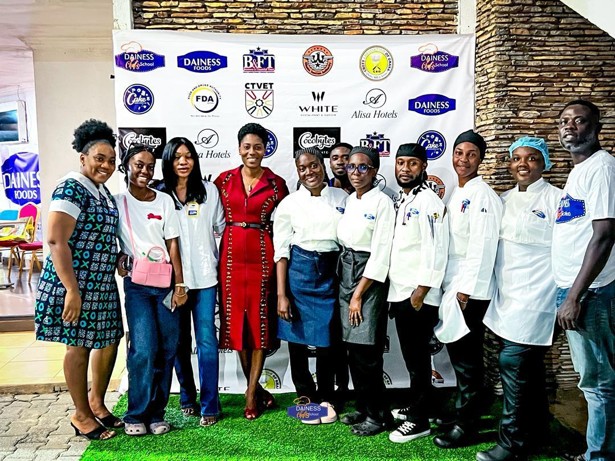
Chefs, hospitality professionals, culinary students and food entrepreneurs discussed the opportunities at the third annual Culinary Expo organised by Dainess Chef School in Accra.
The event, held at the Ghana Academy of Arts and Sciences under the theme “Culinary Innovations: A Ghanaian Perspective,” brought together industry players for demonstrations and discussions on how Ghanaian food can be prepared and presented using modern techniques without losing its identity.
Principal of Dainess Chef School, Pamela Sarkodee, said Ghana had the ingredients and talent to compete in the international food market but needed better training, industry networks, policy support and exposure.
“We have the ingredients. We have the talent. We have the heritage. What we require now is the infrastructure of innovation, the networks, the policies, the training, the exposure, and the confidence to compete on the global stage,” she said.

Making local food more commercial
Some of the demonstrations showed how traditional ingredients could be adapted for new culinary products.
Plantain was used in a gelification demonstration, while cassava flour was turned into boba pearls.
The organisers said such techniques could give chefs more ways to use local ingredients in restaurants, hotels, bakeries and other food businesses.
General Manager of Dainess Chef School, Frank Antwi, said professional cooking required more than knowing how to prepare meals.
He said chefs needed knowledge of food safety, nutrition, food science, presentation, costing, technology and customer expectations.
These skills, he said, were important to the ability of food businesses to control costs, maintain quality and meet customer expectations.
Industry calls for higher standards
President of the Hospitality Alliance of Ghana and chef, Joseph Wilson Tetteh, called for stronger certification for chefs and minimum standards for culinary training institutions.
He said some institutions faced challenges with equipment and differences in training standards, and called for closer cooperation between training institutions and businesses.
He also encouraged commercial kitchens to use standard operating procedures to ensure that customers receive consistent food and service.
“When you are a guest, you are a client,” he said, stressing the importance of maintaining the same or better quality whenever customers return.
Food and tourism
The Ministry of Tourism, Arts and Culture said Ghanaian food could play a bigger role in attracting tourists and promoting the country’s culture.
Speaking on behalf of the Minister, Eunice Martey Anakwah said dishes such as jollof and kelewele, together with locally produced chocolate, could help introduce Ghanaian culture to international visitors.
She said presenting local foods to international standards could turn food preparation into part of Ghana’s cultural diplomacy.
“When we innovate with our traditional breakfast, millet, corn and cocoa, just to mention a few, and present them with world-class standards, they are not just cooking. They are doing diplomacy for Ghana,” she said.
She also called for continuous training to help Ghanaian food and hospitality businesses meet the standards expected by international visitors.
Adding value to cocoa
The expo also examined opportunities to make greater use of Ghanaian cocoa in local food businesses.
Chief Executive Officer of Chocolate Mall, Shirley Temeng, led a chocolate demonstration and explained how the composition and percentage of cocoa in different products affect their use in baking, confectionery and other food preparation.
The discussion points to an opportunity for more local businesses to use processed cocoa products rather than relying mainly on exports of raw cocoa beans.
The expo also featured Chef Abbys, who spoke about using content creation and digital platforms to promote Ghanaian food and reach consumers outside the country.
Dainess Chef School, established in 2018, said it organised the expo as part of its effort to support skills development and knowledge sharing within the culinary industry.
The event was supported by the Ministry of Tourism, Arts and Culture, Ghana Tourism Authority, Chefs Association of Ghana, Commission for Technical and Vocational Education and Training and the Food and Drugs Authority.


