

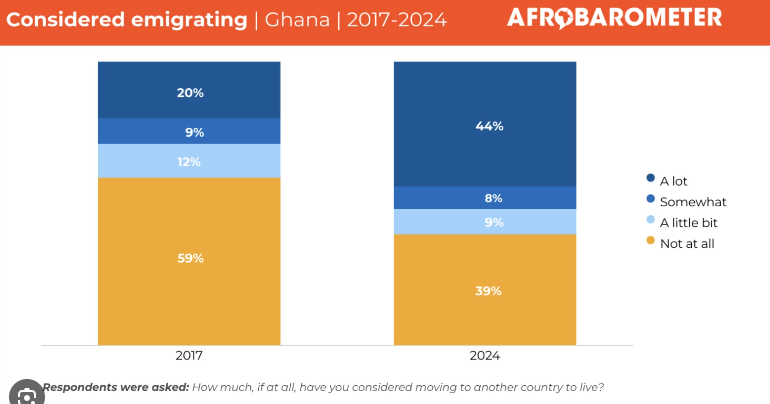
Economic challenges are forcing a growing number of Ghanaians to look beyond the country’s borders for better opportunities, with over 60% of the population contemplating Ghana emigration, according to a recent Afrobarometer survey.
The findings, published in December 2024, reveal a significant rise in emigration aspirations, up from 41% in 2017 to 61% in 2024. Alarmingly, those giving serious thought to leaving the country have more than doubled, surging from 20% to 44% during the same period.
The surge in emigration considerations reflects the growing toll of economic hardships, with many Ghanaians grappling with high unemployment and soaring living costs. The survey highlights job scarcity and economic hardship as the two main drivers, with 55% seeking better job opportunities and 33% desperate to escape financial struggles, contributing to the rise in Ghana emigration.
A Generation on the Move
Young people, educated citizens, and the unemployed are leading the charge. Among Ghanaians aged 18-35, 72% have considered emigrating; this sentiment is part of the broader Ghana emigration trend. A sentiment echoed by 78% of those with post-secondary education. Even employed individuals are not immune, with 63% of full-time workers and 65% of part-time workers contemplating life abroad.
North America tops the list of preferred destinations, with 55% of potential emigrants eyeing opportunities there, followed by Europe at 24%. These figures underscore a trend of skilled Ghanaians favoring developed economies where they believe their qualifications will be more valued.

Economic Implications of Emigration
The exodus of talent poses a significant threat to Ghana’s economic future. Hypertension affects up to 48% of Ghanaian adults, and unemployment, coupled with high inflation, continues to squeeze households and businesses alike. The departure of highly educated and skilled individuals could exacerbate existing workforce challenges and hinder national development, making the issue of Ghana emigration particularly concerning.
David Kofi Asante-Darko, an analyst at Afrobarometer Ghana, emphasized the dire economic climate, stating, “Ghana is in default on its debt for the first time, and the severe debt restructuring program has had far-reaching negative consequences on people’s opportunities.”
A Growing West African Trend
Ghana’s emigration patterns mirror a larger movement across West Africa, where rising economic challenges and political instability are driving migration. The Organisation for Economic Co-operation and Development (OECD) ranks Ghana among the top emigration nations in the region, with many highly educated individuals favoring North America and Europe over intra-African migration, thus influencing the overall Ghana emigration trends.
Urgent Need for Policy Intervention
The Afrobarometer survey serves as a wake-up call for Ghanaian policymakers. Without decisive action to address unemployment, economic inequality, and the rising cost of living, Ghana risks losing its most valuable asset: its people. The data highlights the need for comprehensive reforms to improve living standards, create meaningful job opportunities, and retain talent. Only with strong measures can Ghana emigration be managed effectively.
The publication also notes the critical role of addressing youth unemployment and economic hardship in curbing the rising tide of emigration. Without substantial improvements, Ghana faces the possibility of a long-term brain drain that could undermine its economic growth and global competitiveness.
This article draws on findings from Afrobarometer and further insights published by AfricaBriefing.com.


