
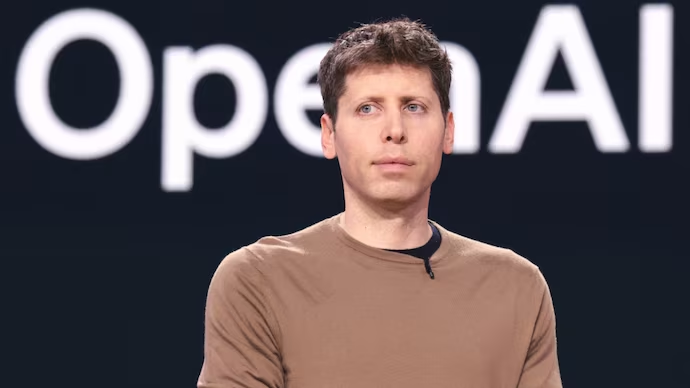
In a bold projection, OpenAI CEO Sam Altman has stated that 2025 could see the introduction of AI agents into the workforce, fundamentally reshaping productivity and corporate operations. Writing in a reflective blog post marking ChatGPT’s second anniversary, Altman outlined the transformative potential of artificial general intelligence (AGI) and its implications for industries worldwide.
“We are now confident we know how to build AGI as we have traditionally understood it,” Altman wrote. “We believe that, in 2025, we may see the first AI agents ‘join the workforce’ and materially change the output of companies.”
A Game-Changer for Workplaces
Altman’s vision for 2025 suggests that AI will move beyond being a support tool to become an active participant in decision-making and innovation. These AI agents, powered by increasingly sophisticated reasoning capabilities, are expected to revolutionize workflows, enhance efficiency, and drive unprecedented levels of output.
The OpenAI CEO underscored the iterative approach to releasing AI technologies as key to ensuring their safe and effective integration into society. “We believe that iteratively putting great tools in the hands of people leads to great, broadly distributed outcomes,” he noted.

The Path Beyond Artificial General Intelligence (AGI)
While the milestone of integrating AI agents into workplaces is a priority, Altman also hinted at an even more ambitious target: achieving superintelligence. “We are beginning to turn our aim beyond that, to superintelligence in the true sense of the word,” he stated. “Superintelligent tools could massively accelerate scientific discovery and innovation well beyond what we are capable of doing on our own, and in turn massively increase abundance and prosperity.”
He acknowledged the challenges and skepticism surrounding such advancements, comparing them to earlier doubts about AGI’s feasibility. “This sounds like science fiction right now, and somewhat crazy to even talk about it. That’s alright, we’ve been there before and we’re OK with being there again.”

Building for the Future
Altman emphasized that OpenAI’s trajectory has been shaped by its adaptability and willingness to evolve alongside its technology. He described the company’s shift from being a research-focused organization to a product-driven one as an example of this flexibility.
“There are new things we have to go build now that we didn’t understand a few years ago, and there will be new things in the future we can barely imagine now,” he said.
2025: A Pivotal Year for AI
As the AI industry continues its rapid growth, Altman’s vision for 2025 signals a defining moment for technology and its impact on society. With AI agents poised to integrate into workplaces and superintelligence on the horizon, OpenAI is preparing to navigate uncharted territory.
Altman concluded with optimism about the possibilities, writing, “With superintelligence, we can do anything else. Given the possibilities of our work, OpenAI cannot be a normal company.”
The world now watches closely as OpenAI approaches this pivotal milestone, potentially heralding a new era in the relationship between humans and technology.


