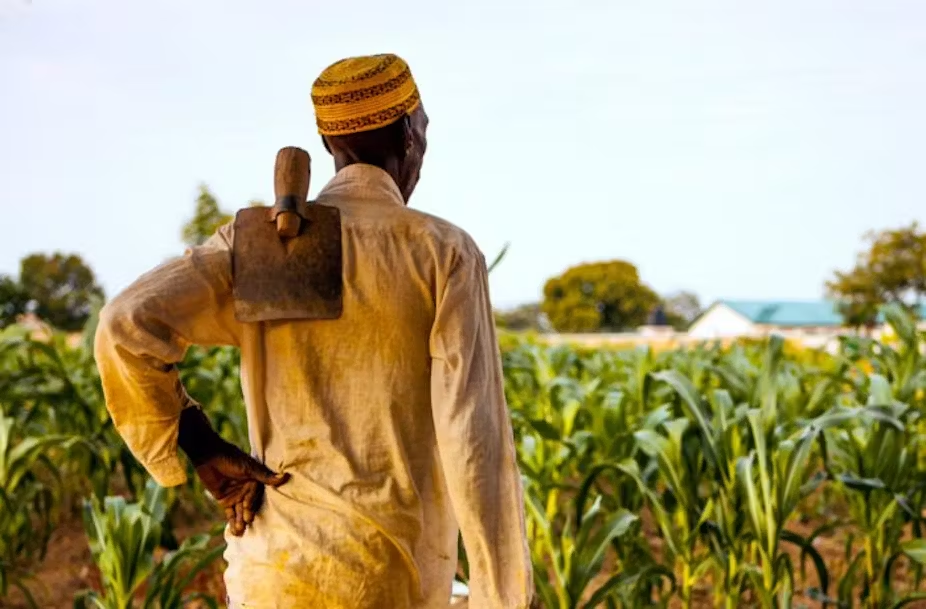
Ghana’s agricultural research landscape is facing an uncertain future following the cancellation of crucial USAID funding. This decision threatens to upend the progress made by key institutions such as the Council for Scientific and Industrial Research (CSIR) and its affiliated Savanna Agricultural Research Institute (SARI), whose projects have been vital in boosting the productivity of the country’s agricultural sector.
The Role of CSIR and SARI
For years, USAID funding has been instrumental in advancing research initiatives aimed at enhancing agricultural productivity in Ghana, particularly in the northern regions. SARI, one of the 13 institutes under the CSIR umbrella, located in the Tolon District of the Northern Region, has been at the forefront of these efforts. The institute has been implementing projects to improve the quality of seeds and promote modern agricultural technologies among smallholder farmers, ensuring that the benefits of scientific research reach the grassroots.
Projects on the Brink of Extinction
The abrupt cancellation of USAID support is bound to halt approximately 15 key research projects at SARI. These projects, described by experts as game-changers for the local agricultural sector, are now at risk of extinction. Without the necessary funds, the research and development efforts that were designed to improve seed quality, develop sustainable farming practices, and introduce innovative technological tools to farmers are now facing a severe setback.
The Critical Need for Technological Innovation
Modern agriculture increasingly relies on advanced technological tools—from precision farming to data analytics—to maximizing productivity and sustainability. SARI’s research projects, supported by USAID, have not only focused on traditional agricultural practices but also on integrating these modern tools to empower smallholder farmers. The cancellation of funding disrupts this progress, leaving a gap that must be urgently filled to prevent the erosion of hard-won gains in the sector.
Bridging the Funding Gap
Ghana’s heavy reliance on external funding for scientific and industrial research underscores the need for a diversified funding strategy. The current crisis has brought to the fore, the vulnerability of relying on a single donor sources for sustaining critical research programs. To ensure the continuity of agricultural innovations and to support the livelihoods of countless smallholder farmers, there is an immediate need for:


Increased Government Investment: The government must step up its financial commitment to agricultural research. Enhanced funding can help sustain ongoing projects and foster new initiatives that address local agricultural challenges.
Private Sector Partnerships: Engaging local and international private investors can open new avenues for funding. Collaborative efforts between the public and private sectors could provide the financial stability needed to drive research and development forward.
Embracing Agricultural Technologies: It is imperative to accelerate the adoption of modern agricultural technologies. Investments in digital tools, precision farming equipment, and data analytics platforms will help bridge the gap left by the loss of USAID funding and ensure that research remains relevant and impactful.
The cancellation of USAID funding serves as a stark reminder of the challenges that arise when a country are overly dependent on external support. For Ghana to safeguard its agricultural future, it must proactively seek alternative funding sources and strengthen its commitment to embracing technological advancements. Only by doing so can it ensure that research institutions like CSIR and SARI continue to thrive, providing smallholder farmers in with the quality seeds and innovative tools they need to drive sustainable agricultural development. Ghana can not only mitigate the current crisis but also build a resilient foundation for future agricultural innovations.
Agric sector’s contribution to the economy of Ghana
Agriculture is undeniably the backbone of Ghana’s economy, engaging about 52% of the nation’s labor force and providing livelihoods for nearly half of its citizens. This vital sector not only contributes approximately 54% to the country’s GDP but also generates over 40% of its export earnings while meeting more than 90% of the food needs of the population.
In the third quarter of 2024 alone, agriculture accounted for 24.5% of Ghana’s GDP, registering a year-over-year growth of 3.2%. This steady expansion underscores the sector’s resilience and its crucial role in driving economic stability.
Beyond numbers, agriculture remains a key pillar in ensuring food security, fostering rural development, and paving the way for sustainable growth, making it indispensable for Ghana’s long-term prosperity. Initiatives and strategic policies and investment in the sector will go a long way to impact its already laudable contribution to Ghana’s economy.