

Ghana’s economy is entering 2026 with renewed momentum, as falling inflation, easing monetary policy and improving fiscal discipline combine to strengthen investor and business confidence, according to data from the Bank of Ghana (BoG) and Ghana Statistical Service (GSS).
Much of the macroeconomic turnaround recorded in 2025 was driven by tight fiscal consolidation by the Ministry of Finance and a deliberate policy reset by the Bank of Ghana. The central bank overhauled its liquidity management framework, laying the foundation for a gradual but sustained easing cycle.

In November, the Monetary Policy Committee cut the benchmark policy rate by 350 basis points to 18 percent, extending total reductions for the year to 1,000 basis points. The timing of the cuts reflected improving macro fundamentals rather than short-term pressures.
Headline inflation fell sharply to 6.3 percent in November, its lowest level in recent years, while Treasury yields remained in double digits, preserving positive real interest rates and supporting currency stability. Inflation is expected to settle between 5 and 6 percent in 2026, even as external buffers remain relatively strong despite a softer outlook for oil prices, partly offset by higher gold exports.

Governor of the Bank of Ghana, Dr. Johnson Pandit Asiama, said the economy has reached a “sweet spot” for portfolio investors heading into 2026, as inflation retreats to single digits, economic growth stabilises above 5 percent and policy shifts toward supporting expansion.

Economic projections point to growth of about 5.6 percent next year, supported by easing financial conditions and rising investor confidence. Domestic activity has already gained momentum, with GDP expanding by 5.5 percent in the third quarter of 2025, led by services and agriculture, while oil and gas moderated industrial output.
Fiscal performance also strengthened, with the overall deficit narrowing to 1.5 percent of GDP in the first nine months of 2025, outperforming the 3.2 percent target, largely on the back of restrained public spending.

Financial markets have responded positively to the improving outlook. The Ghana Stock Exchange Composite Index climbed to 8,755.59 points by December 22, driven by strong activity in banking, consumer, telecom and energy stocks. The successful listing of Atlantic Bank (FAB) further reinforced investor confidence in Ghana’s capital market recovery.
Credit conditions have also begun to improve. Private sector credit growth turned positive by October, reaching 5.4 percent in real terms, signalling a gradual return of lending to productive sectors of the economy.
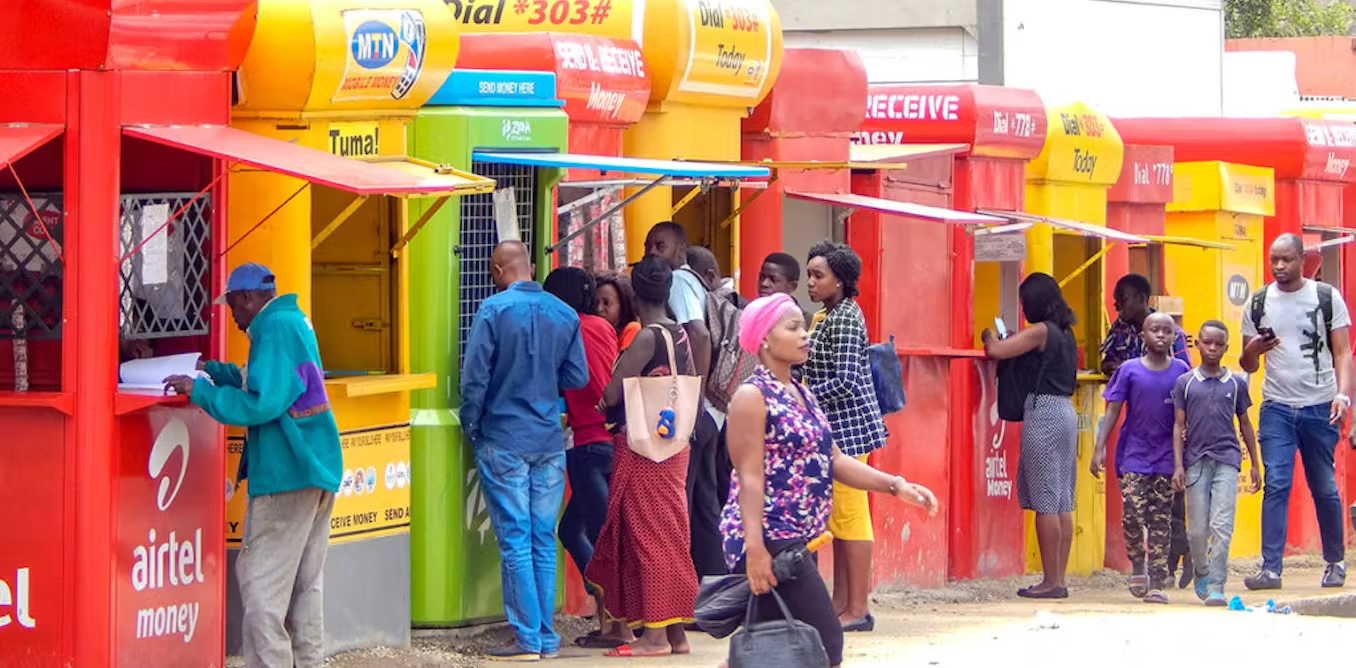
Alongside these developments, digital finance continues to deepen its role in Ghana’s economic transformation. Registered mobile money accounts climbed to about 9 million, supported by nearly 9.5 million registered agents nationwide. Interoperability across platforms reached 61.8 percent by the end of 2024, boosting transaction efficiency and system-wide throughput.
Total mobile money and digital transactions for the first ten months of 2025 reached approximately GHS 3.6 trillion, underscoring the growing importance of mobile-first financial services in driving inclusion, commerce and innovation.
Analysts say the convergence of macroeconomic stability, declining interest rates, improving credit conditions and expanding digital finance positions Ghana as an increasingly attractive frontier market for investors in 2026.


