

BMW AG is facing a costly recall, expected to amount to nearly €1 billion (GH¢17.38billion), after it took over two years to fully uncover the extent of a braking system defect. The problem, originating from a part supplied by Continental AG, has affected up to 1.5 million vehicles, including high-end models like Rolls-Royce Spectres and BMW’s flagship 7-Series.
Customer and dealer complaints about faulty brakes began in June 2022, but BMW only launched an in-depth investigation into the issue in October 2023. The review identified interference affecting the electric signals in the brake system, leading to a recall that started with 80,000 vehicles in the U.S. earlier this year. This recall has since expanded to cover 1.5 million cars across several of BMW’s brands.
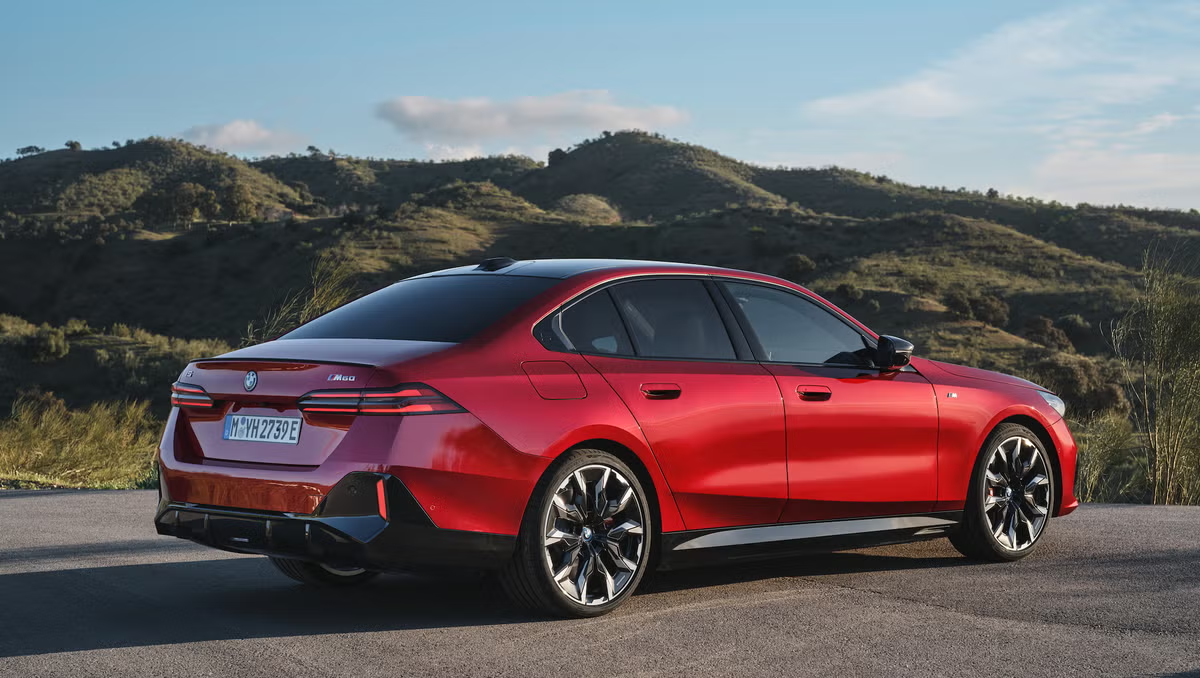
This incident represents a significant reputational hit for BMW, a company renowned for its technology leadership and commitment to quality. A profit warning related to the recall caused the company’s value to drop by €5 billion (GH¢86.9 billion) last week. The recall involves Continental’s “brake-by-wire” system, which uses electronic impulses rather than traditional hydraulic technology. The issue was traced back to a production plant in Hungary, where contaminants on circuit boards interfered with the system’s performance, raising safety concerns.
Although no accidents or injuries have been reported, the recall affects luxury models like Rolls-Royce’s $420,000 (GH¢6.7 million) Spectre. The faulty “power braking” feature, designed to reduce the effort needed to activate the brakes, has been identified as the root cause. The failure to fully engage this feature could make it difficult for physically weaker drivers to stop the vehicle in emergency situations, increasing the risk of accidents.

Continental’s plant failures and quality control issues highlight broader concerns about the automotive industry’s supply chains. Andrew Graves, an automotive expert from the University of Bath, suggested that rising recalls could point to larger issues with automakers’ due diligence regarding suppliers, raising questions about the industry’s focus and priorities. BMW, meanwhile, is facing months of repairs and uncertainty over the final costs of the recall, adding further pressure to Germany’s already struggling automotive sector amid slowing electric vehicle sales and challenges in the Chinese market.


