
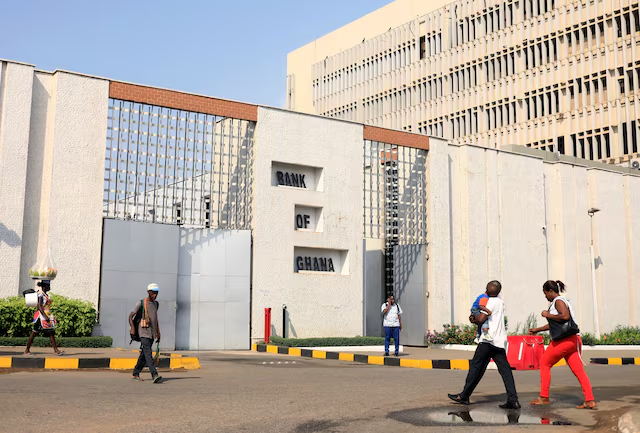
The Governor of Bank of Ghana (BoG), Dr. Johnson Asiama, has announced that the central bank is set to review the current Cash Reserve Ratio (CRR) for commercial banks across the country.
He said the BoG recognizes the impact of the CRR on commercial banks and intend to review it critically, adding that “any adjustments must be phased to prevent unintended economic consequences.”
However, he stressed that the review will be carried out gradually to avoid disruptions to the economy.
Speaking at a meeting with the Ghana Association of Banks (GAB), on February 21, 2025, Dr. Asiama acknowledged the difficulties banks faced in securing new correspondent relationships and pledged to assess the issue further.
He assured them that the central bank would continue engaging with stakeholders on the matter.


In March 2023, the Bank of Ghana increased the cash reserve ratio on local currency deposits from 12% to 14% as part of measures to absorb excess liquidity in the market. This made commercial banks urged the central bank to review the ratio, arguing that it was restricting financial intermediation and raising banking costs.
The meeting discussions also touched on Ghana’s credit rating challenges and their impact on correspondent banking relationships, hence, GAB members requested an upward revision of Nostro and affiliate exposure limits to ease constraints on international transactions.
The GAB Governing Council also called on the central bank to end the mandatory sale of foreign exchange proceeds from mining and oil companies to the Bank of Ghana. They argued that channeling these proceeds through the banking system would enhance foreign exchange price discovery.
Dr. Asians in his remarks announced that the BoG is reviewing the operations of Money Transfer Operators (MTOs) and encouraged commercial banks to support efforts to streamline the sector for greater transparency.
He noted the growing influence of MTOs and fintech companies in the remittance sector and highlighted concerns about regulatory gaps that could lead to foreign exchange losses.
Dr. Asiama also confirmed that the central bank intends to extend the special dispensation granted to commercial banks during the Domestic Debt Exchange Programme (DDEP).
The extension follows concerns from banks about the expiration of the special dispensation on restructured cocoa bonds under the DDEP, which is set to end in April 2025. Banks fear that market illiquidity and COCOBOD’s financial position might make it difficult to sell these bonds.
On the issue of rising non-performing loans, Dr. Asiama emphasized the importance of fiscal policy in reducing inflation and interest rates.
Additionally, he reaffirmed the BoGs commitment to doubling agricultural financing and supporting the Ghana Incentive-Based Risk-Sharing System for Agricultural Lending (GIRSAL) in raising additional guarantee funds.


