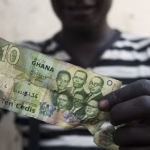
Today, December 31st, 2024 is filled with a mix of reflection, anticipation, and cautious optimism as Ghanaians prepare to usher in a new year. Against the backdrop of economic challenges and a recent change in government, many are looking to 2025 with hopes of recovery and transformation to improve the Ghana Economic Outlook 2025.
The election of John Dramani Mahama as president has fueled discussions about the direction of the country’s economic recovery, with citizens and businesses alike speculating on the policies that will shape their future and impact the Ghana Economic Outlook 2025.
Ghana’s economy has faced persistent challenges, including high inflation, a depreciating currency, and soaring living costs. Unemployment remains a pressing concern, particularly among the youth, as job creation has lagged behind the growth of the working-age population. These factors will all play a role in shaping Ghana’s Economic Outlook 2025.

Wages for many have failed to keep pace with inflation, eroding living standards and leaving households struggling to make ends meet. The recent $3 billion bailout deal with the International Monetary Fund (IMF), secured earlier in 2024, aims to stabilize the economy and set a more stable Ghana Economic Outlook 2025.
President-elect Mahama has committed to maintaining the IMF program while renegotiating its terms to address wasteful government spending, improve tax policies, and reform the energy sector to enhance economic efficiency.

For many, the transition in leadership represents a beacon of hope. Mahama’s victory, with 56.55% of the vote, signals a call for change, especially in addressing unemployment and poverty. The National Democratic Congress (NDC)’s parliamentary majority adds weight to expectations of decisive governance and economic reforms.

Citizens have expressed optimism that the new administration will prioritize job creation, with an emphasis on bolstering manufacturing and technology sectors to ensure a more inclusive economic recovery.
Economic analysts, however, point to persistent structural issues. Over the past two decades, Ghana’s economy has shifted from agriculture to industry and services. While the services sector now contributes 43% of GDP, agriculture has declined to 20%, though it still employs over 40% of the population. These sectoral shifts are crucial for the Ghana Economic Outlook 2025.
Citizens are not only expecting economic reforms but also expressing hope for tangible improvements in their daily lives. Many believe the change in government will bring new ideas and accountability, essential for reducing economic inequalities and fostering growth.
Young people, in particular, are eager to see policies that address youth unemployment and provide meaningful opportunities. Others anticipate a focused effort to tackle wage stagnation and improve living standards across the board.
Looking ahead, citizens are calling for measures to stabilize inflation, strengthen the cedi, and reduce the cost of living. Businesses are hopeful for reforms that will make Ghana more competitive, attract foreign investment, and create jobs in labor-intensive sectors.
Policymakers face the dual challenge of addressing immediate economic concerns while laying the groundwork for sustainable growth for the Ghana Economic Outlook 2025.
The International Monetary Fund (IMF) has projected Ghana’s GDP growth to reach 4.4% by 2025, contingent on successful implementation of reforms.
As the final hours of 2024 fade, the mood across Ghana reflects both the weight of past challenges and the hope for a brighter future with a positive Ghana Economic Outlook 2025.